Article
Portugal Homes
Get the best property advice.
The Alentejo covers a huge part of Portugal, and where you choose to live within it can change almost everything about day-to-day life.
A home in central Évora, a monte surrounded by farmland outside Beja, and a villa close to Comporta may all be in the Alentejo, but they offer very different lifestyles, property markets, and practical considerations.
Living in the Alentejo suits people looking for more space, quieter surroundings, and rural or small-town life, but much of the region requires a car, and inland summers can be extremely hot.
Towns are smaller, development is less dense, and rural property plays a much bigger role than around Lisbon or much of the Algarve. Along the Atlantic coast, the climate, property market, and pace can be quite different again.
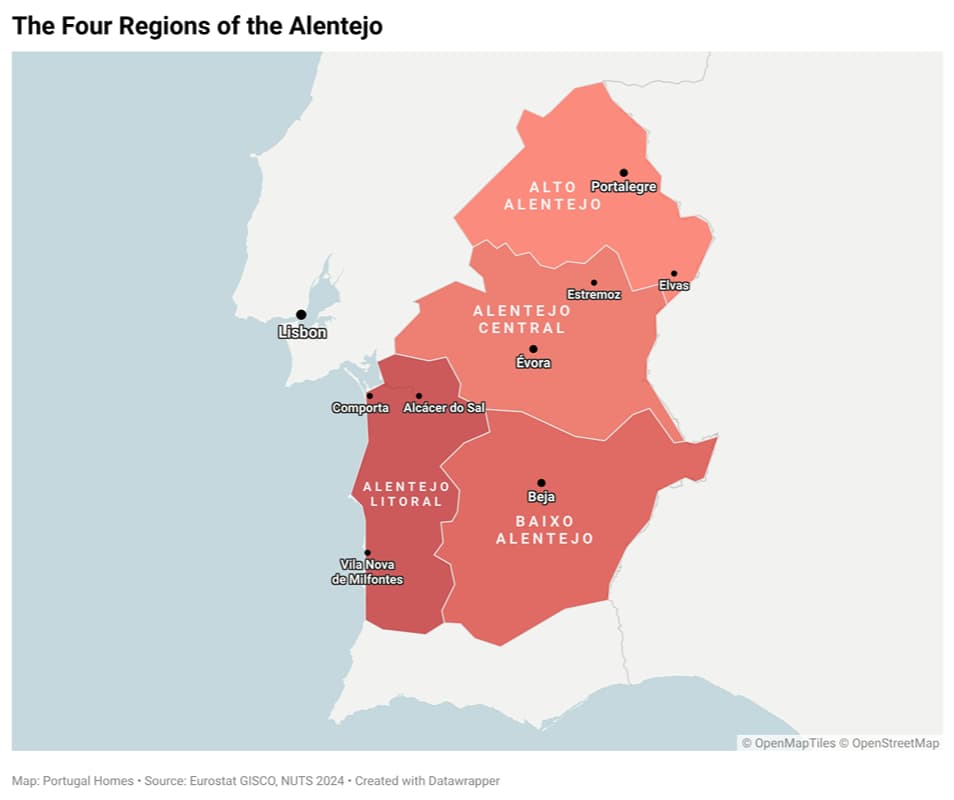
The Alentejo spans four regions, stretching from the Atlantic coast to the Spanish border.
Is the Alentejo a Good Place to Live?
The Alentejo works particularly well for people who actively want more space and a lower-density environment.
That might mean living in a historic city such as Évora, choosing a smaller town where most daily needs remain close by, or moving into the countryside and accepting that driving will become part of everyday life.
Some of the region’s main advantages are:
Space and privacy
Easy access to countryside and nature
Historic cities and smaller towns with established year-round communities
A wide choice of rural homes and properties with land
Both inland and Atlantic-coast lifestyles
Less development and congestion than Portugal’s largest metropolitan areas
There are practical drawbacks too:
Much of the region is difficult to navigate without a car
Rural properties can be a significant drive from shops and services
Inland summers can be very hot
Hospital and specialist healthcare is concentrated in regional centres
Employment options are narrower than in Lisbon or Porto
Land, pools, and older rural buildings all add maintenance
The premium coastal market bears little resemblance to property prices farther inland
Who Is the Alentejo Best Suited To?
Retirees
For people retiring in Portugal, the Alentejo offers things that are harder to find around the country’s largest cities: quieter surroundings, more space, and the possibility of a larger home or garden.
A home in Évora or Beja puts shops, healthcare, and everyday services relatively close at hand. Move several kilometres into the countryside and those same errands may require a car every time.
Journey times to healthcare and the amount of property or land you actually want to maintain should be part of the decision from the start.
Remote Workers
Remote work makes many Alentejo locations realistic for people who don’t depend on the local employment market.
For remote workers in Portugal, internet quality should be checked at the exact property rather than assumed from coverage in the wider municipality.
If work still involves regular meetings or flights, the journey to Lisbon, an airport, or a railway station may matter almost as much as the home office.
Buyers Looking for Land and Privacy
This is one of the clearest reasons to consider the Alentejo.
The market includes montes alentejanos, country houses, farms, and larger estates offering levels of land and privacy that become much harder to find around Lisbon, Cascais, and more densely developed parts of the Algarve.
Water supply, access, land boundaries, outbuildings, and maintenance all become part of the purchase. If you’re looking for five hectares, it’s worth thinking seriously about what maintaining five hectares involves.
Families
Families are likely to find permanent life easiest in or around established towns and cities.
A rural home can still work perfectly well, but school journeys, activities, shopping, and work can create far more driving than the property viewing initially suggests.
If schooling will determine where you can live, identify realistic options before narrowing the property search.
Second-Home Buyers
The Alentejo also works well for people looking for somewhere they’ll use periodically rather than full-time.
Driving 25 minutes for groceries may barely register during a weekend in the countryside. Doing it repeatedly during a normal working week is different.
Who Might Prefer Another Region?
The Alentejo is less likely to suit someone who wants:
A genuinely car-free lifestyle
A large local employment market
Easy access to a wide choice of specialist services
Frequent international travel without a substantial onward journey
Mild inland summers
The restaurants, shops, and cultural choice of a major city
Everyday Life in the Alentejo
Think in Journey Times
Distance is one of the easiest things to underestimate.
A property may be described as “near Évora” or “close to Beja”, but what matters is how long it takes to reach the supermarket, pharmacy, school, hospital, or restaurant you’ll actually use.
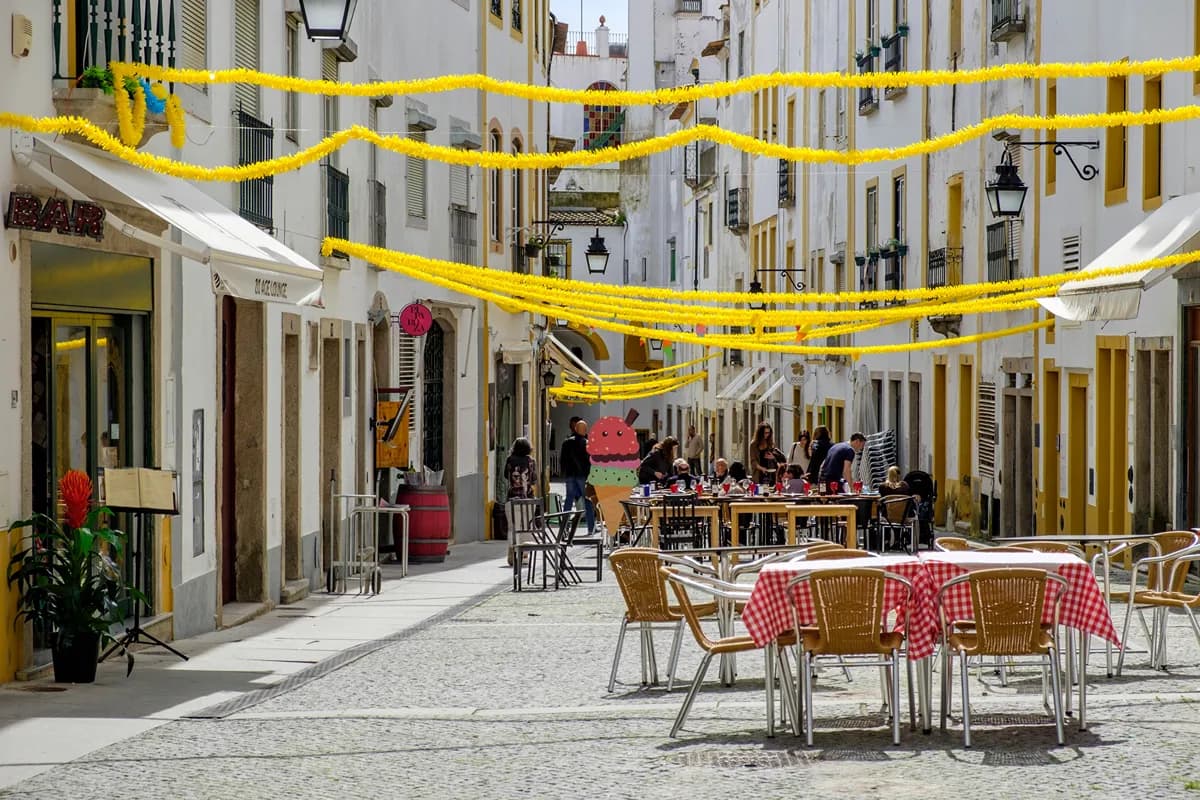
In central Évora, parts of the historic centre put supermarkets and other everyday services within around 10 minutes on foot. Local buses connect the centre with the hospital area, while the city’s main bus terminal is also within walking distance of Praça do Giraldo at the heart of the city.
Compare that with living in the village of Monsaraz. The nearby larger town of Reguengos de Monsaraz, where there’s a wider range of shops and services, is around 15 to 20 minutes away by car. A direct bus takes longer and depends on the timetable. Évora itself is roughly 50 minutes away by car, while getting there by public transport can take considerably longer and may require a change.
Exact times depend on the property and timetable, but that contrast is what matters.
For a rural buyer, map a normal week rather than a sightseeing itinerary. Where will you buy food? How long is the school run? Where’s the nearest pharmacy? How easily can a delivery vehicle or tradesperson reach the house?
Town and Country Are Different Propositions
Central Évora, Beja, and other established towns can support a fairly conventional Portuguese routine. Shops, cafés, markets, and services are concentrated enough that some daily tasks can be done on foot.
In the countryside, errands need more planning. Dinner out means someone is driving home. Larger shopping trips become more deliberate. A repair or delivery can take more organisation.
Inland Alentejo or the Alentejo Coast?
One of the first distinctions worth making is whether you want to live inland or close to the Atlantic.
Inland Alentejo
Inland areas generally offer:
Very hot, dry summers
Historic towns and villages
A substantial rural property market
Farmland and larger plots
Low-density surroundings
More scope for privacy
Greater car dependence outside larger towns
Alentejo Coast
Closer to the Atlantic, the picture changes.
The coast offers:
Stronger maritime influence on the climate
Beaches and coastal towns
More seasonal tourism in popular locations
Access to some of Portugal’s most sought-after second-home areas
Considerably higher property prices in premium markets
What Is the Weather Like in the Alentejo?
Inland Alentejo has some of Portugal’s hottest summer weather.
In Évora and Beja, average daytime maximum temperatures are above 33°C in July and August.
That should influence the property you choose. Shade, insulation, air conditioning, shutters, orientation, and the position of terraces can all affect how comfortable a home is through summer.
A terrace exposed to the afternoon sun may look appealing during a spring viewing and be far less usable at four o’clock in August.
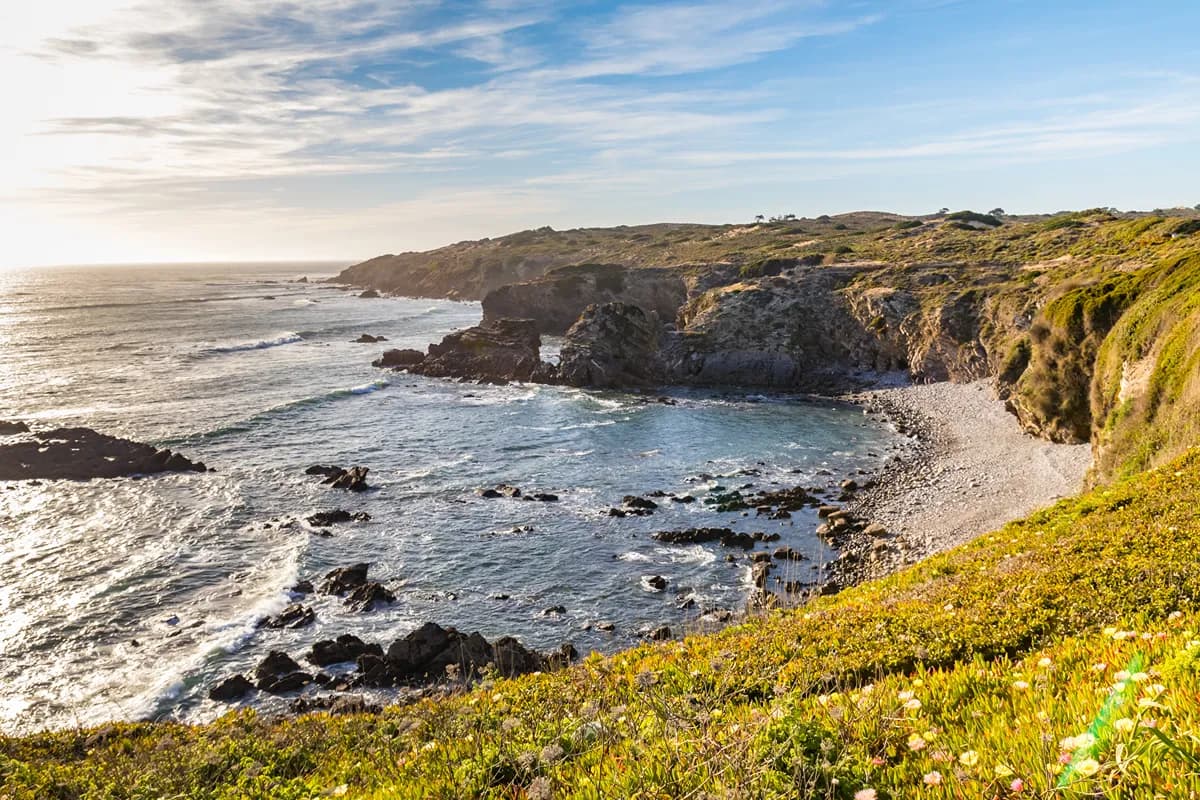
The Atlantic coast has a stronger maritime influence and generally avoids some of the most intense inland conditions.
These differences form part of the wider variation in Portugal’s weather and climate.
Can You Live in the Alentejo Without a Car?
In some town and city centres, yes. Across much of the region, it becomes difficult.
Évora is one of the clearest examples of somewhere that can support more daily life on foot, while rail and bus services connect several of the region’s larger centres with Lisbon and other parts of Portugal.
Rural living is different.
A railway station ten kilometres away is of limited use if there’s no practical way to reach it. The same applies to buses: the existence of a regional route doesn’t mean it serves the road where you live at a time that works for your routine.
Before buying, check the journey from the property itself to the places you’ll regularly need.
What Are the Main Drawbacks of Living in the Alentejo?
More space often means greater distances. Fewer neighbours can mean fewer services nearby. A substantial rural property gives you privacy, but it also gives you more to look after.
Heat deserves particular attention inland, especially for anyone who doesn’t enjoy prolonged hot weather.
There’s also a difference between wanting peace and wanting isolation.
A property with no visible neighbours may be exactly what you’re looking for. It can also mean a longer journey when you run out of groceries, need a plumber, or have an urgent medical problem.
Cost of Living in the Alentejo
There isn’t a particularly useful single “Alentejo property price”.
The coastal and inland markets are very different, while individual municipalities diverge even further. Areas around Comporta and Grândola, for example, sit in a very different part of the market from much of inland Alentejo.
A buyer looking around Beja shouldn’t use Comporta as a benchmark for what the region costs.
Current house prices in Portugal provide a more useful national and regional comparison.
The same applies to running costs. A townhouse in Évora and a country estate with several hectares, a pool, and multiple vehicles may be in the same region but won’t have comparable household budgets.
Broader living costs in Portugal provide a useful baseline before adding the costs associated with a particular property and lifestyle.
Healthcare, Schools, and Everyday Services
Healthcare
Primary healthcare is available across the Alentejo, while hospital and specialist services are concentrated in larger regional centres including Évora, Beja, Portalegre, and Santiago do Cacém.
Someone who needs regular specialist appointments may want to set a maximum acceptable journey time before beginning the property search.
The healthcare system in Portugal combines public and private provision, but geography becomes particularly important when choosing a rural home.
Schools
Schools follow the wider Portuguese education system, but the practical choice available to a family depends heavily on location.
If you’re considering a rural move, identify suitable schools first and calculate the actual journey from the areas where you’re considering buying.
Families looking specifically for international or private schools in Portugal will find fewer options in the Alentejo than around Lisbon or the Algarve.
Shopping and Services
Évora, Beja, and other regional centres provide the normal services required for year-round life. A smaller town may cover most everyday needs too.
The difference becomes more noticeable once you move into the countryside, where a larger supermarket, particular doctor, bank branch, or specialist shop may require a deliberate journey.
When viewing a home, check the places you expect to use every week rather than simply the nearest town.
Buying Property in the Alentejo: What Needs Extra Attention?
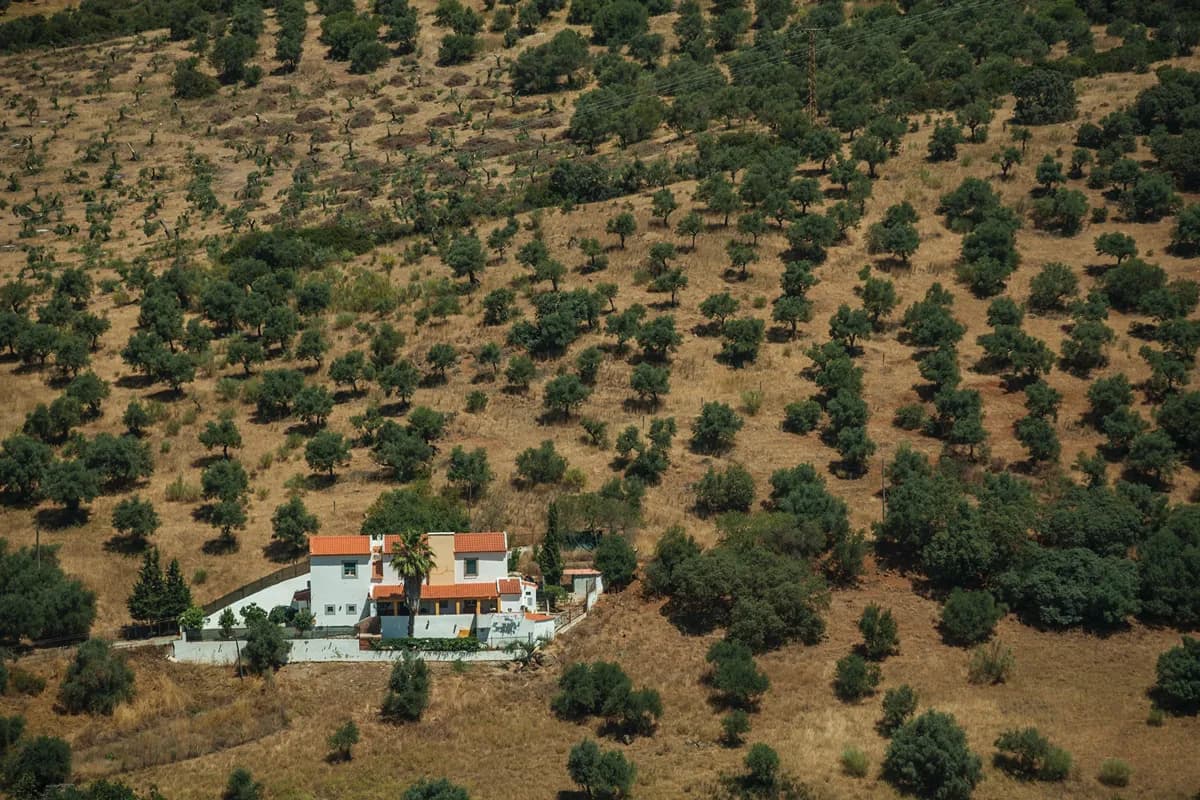
The overall process of buying property in Portugal is the same here as elsewhere in the country.
A rural Alentejo property can introduce questions that rarely arise when buying an apartment in Lisbon.
A standard property viewing checklist still applies, but a country house or property with land deserves several additional checks.
Water
Find out exactly where the water comes from.
A rural property may use mains water, a borehole, a well, storage tanks, or a combination of systems.
Then consider what you intend to do with it. A household supply and the water needed for a pool, substantial garden, or agricultural land aren’t necessarily the same thing.
The technical and legal status of any private supply should be checked during due diligence.
Wastewater and Utilities
Some properties use septic systems rather than mains sewerage.
Internet and mobile signal should also be checked at the house itself. Don’t rely solely on advertised coverage for the wider municipality.
For anyone working remotely, establish this before making an offer.
Road Access
Drive the actual access road.
Check its surface, width, and condition, and think about using it throughout the year rather than only on the day of the viewing.
Deliveries, maintenance vehicles, and emergency access matter too.
Where there’s any uncertainty about rights of access, have the legal position verified.
Land and Buildings
A large property may contain several land parcels, outbuildings, ruins, tracks, or structures added over time.
Make sure the registered property corresponds with what you believe you’re buying.
Questions around ownership, permitted use, building status, and licensing should be checked by the appropriate legal and technical professionals rather than inferred from what’s physically present.
Summer Comfort
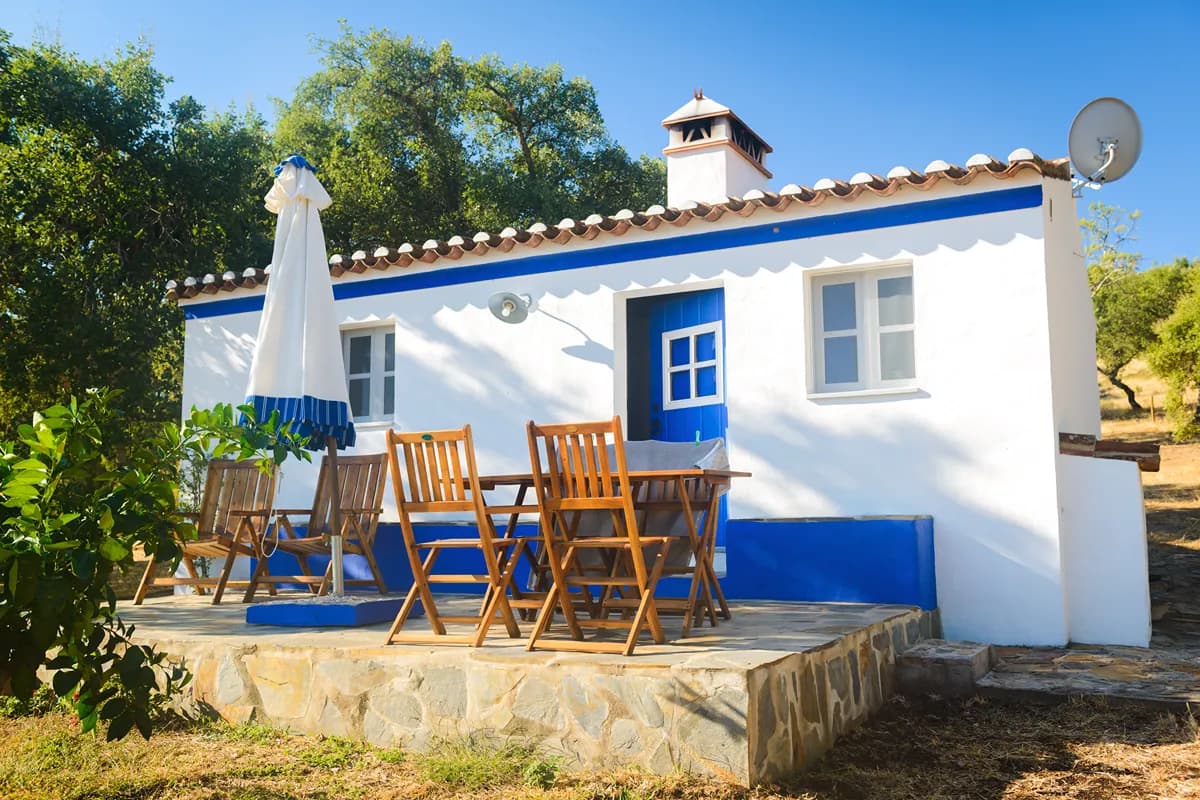
Inland heat changes what makes a good house.
Check:
Orientation
Natural shade
Insulation
Shutters or other window protection
Cooling systems
Where terraces and outdoor seating areas face
How the house is likely to perform during the hottest part of the day
These details can matter more to year-round comfort than an extra bedroom or a slightly larger plot.
Maintenance
Pools, mature gardens, olive trees, vineyards, and large areas of land all need looking after.
Before buying, work out what you can realistically maintain yourself, what will need professional help, and what happens when you’re away.
More land is only an advantage if you want the responsibility that comes with it.
Where Is the Best Place to Live in the Alentejo?
Different locations make sense for different reasons.
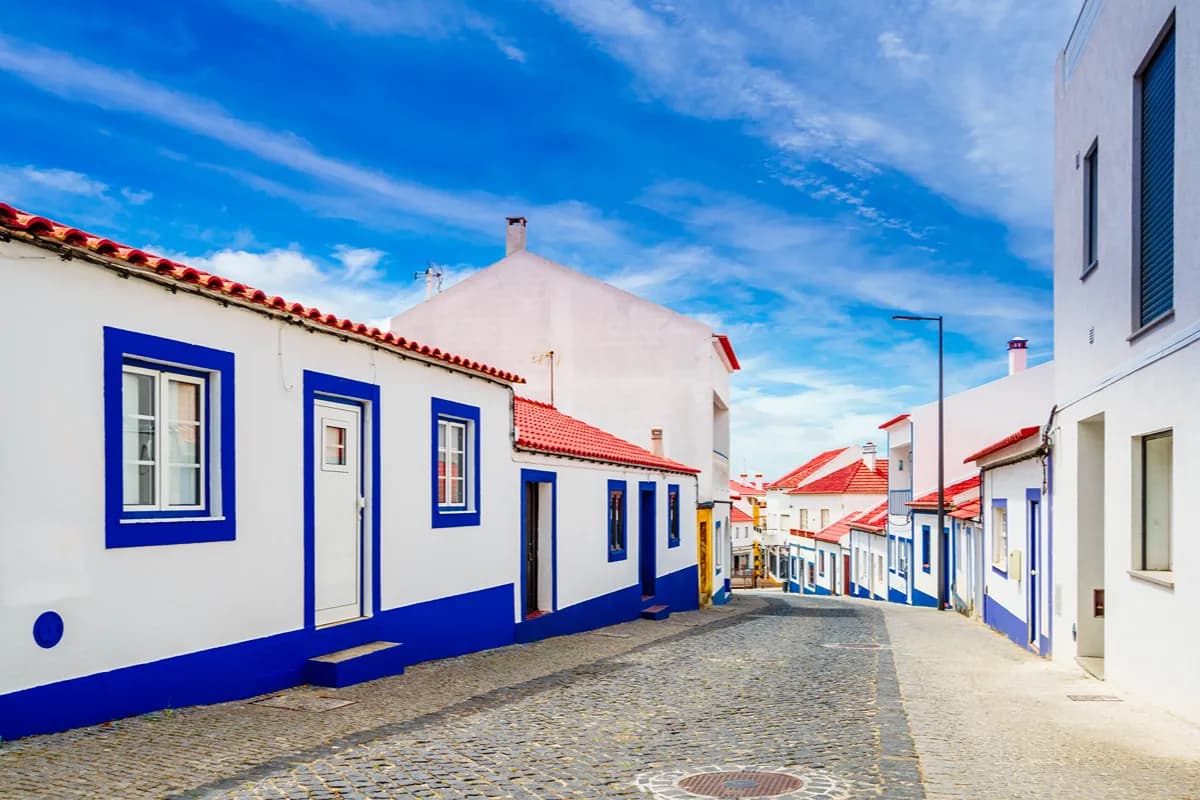
Évora: For Services and a More Walkable Life
Évora is the clearest starting point for someone who wants an Alentejo setting without giving up the practical advantages of a city.
The centre has shops, restaurants, healthcare, a university, and everyday services, while countryside begins quickly beyond the urban area.
It’s one of the stronger choices for permanent residents who want to reduce their dependence on a car.
Beja: For a Quieter Regional Centre
Beja offers many of the essentials of a regional centre in a smaller and quieter setting.
It may suit buyers who want services close at hand but have little interest in living somewhere heavily shaped by international tourism.
Its very hot summers and greater distance from Lisbon and the Atlantic are the main things to weigh up.
Estremoz and Vila Viçosa: For Small-Town Life
Estremoz and Vila Viçosa offer historic surroundings and easy access to the countryside without the isolation of a remote rural property.
They’re useful options for buyers who find Évora larger than they need but still want shops and services within a proper town environment.
Elvas: For Access to Spain
Elvas sits close to Badajoz and the Spanish border, giving it a very different geographic logic from places chosen mainly for access to Lisbon or the coast.
It’s particularly relevant if regular travel into Spain forms part of your work or personal life.
Marvão and Castelo de Vide: For a Greener, More Rural Setting
Marvão and Castelo de Vide offer a more elevated and greener landscape than the plains farther south.
They suit buyers deliberately looking for small-town or countryside life, rather than somewhere with a broad range of services immediately on the doorstep.
Alcácer do Sal: For Lisbon and the Coast
Alcácer do Sal sits in useful middle ground.
It has an established town centre, puts the Comporta coast within easy reach, and keeps Lisbon more accessible than many locations deeper in the region.
For buyers who want both countryside and coast without living in Comporta itself, it’s one of the more interesting options.
Comporta and Carvalhal: For the Premium Coastal Market
Comporta and neighbouring Carvalhal bear little resemblance to the typical image of an affordable rural Alentejo.
They form a high-end coastal market shaped by beaches, design-led homes, second-home demand, and international buyers. Prices and daily life here shouldn’t be treated as representative of the wider region.
Vila Nova de Milfontes and the South-West Coast: For Coastal Town Life
Farther south, Vila Nova de Milfontes offers another version of the coast.
It combines an established town with beaches and outdoor access without quite the same luxury-market identity as Comporta.
Lisbon and the Alentejo’s larger inland centres are substantially farther away, which matters more for permanent residents than it might during a holiday.
Alentejo vs Other Parts of Portugal
Alentejo vs Algarve
The Algarve is likely to work better if you want a larger international community, extensive coastal infrastructure, and a property market built around long-established overseas demand.
The Alentejo generally offers less development, fewer people, and more opportunities for genuinely rural living.
Alentejo vs Lisbon and Cascais
Lisbon and its surrounding areas offer much greater employment choice, public transport, international connections, and specialist services.
The Alentejo makes more sense if gaining space and reducing density are central to the move.
Alentejo vs Silver Coast
The Silver Coast also offers smaller towns, countryside, and Atlantic living.
It may appeal more to buyers looking for milder summer conditions or easier access to Lisbon or Porto, depending on location.
The Alentejo has the stronger case if land, privacy, and a distinctly rural setting are higher priorities.
Questions to Answer Before Moving to the Alentejo
Before narrowing the property search, be clear about the following:
How much driving am I willing to do each week
Do I actually want rural isolation, or simply somewhere quieter
How well do I cope with very hot summers
How close do I need to be to healthcare and schools
Is the coast important to me
How much land do I really want to maintain
Do I need dependable internet for work
How frequently will I travel to Lisbon, the Algarve, or an airport
Would the property still work for me on an ordinary weekday in February or August
Those answers will usually narrow the search faster than starting with a list of attractive towns.
Finding the Right Home in the Alentejo
A walkable home in Évora, a rural estate outside Beja, and a contemporary villa near Comporta require completely different property searches.
Explore properties for sale in the Alentejo or speak to a Portugal Homes property advisor about finding the location and property that fit the way you want to live.




Talk to one of our Real Estate Experts
Portugal Homes
Get the best property advice.