Article

Portugal Homes
Get the best property advice.
Remote work is no longer a trend but a global reality.
With the freedom to work from anywhere, professionals are increasingly choosing destinations that offer quality of life, reliable infrastructure, and lifestyle balance.
Portugal has emerged as one of the world’s most attractive countries for entrepreneurs and remote workers, benefiting both digital nomads and investors.
Below, we answer the most frequent questions about working remotely in Portugal and explore why the country is at the centre of this growing movement.
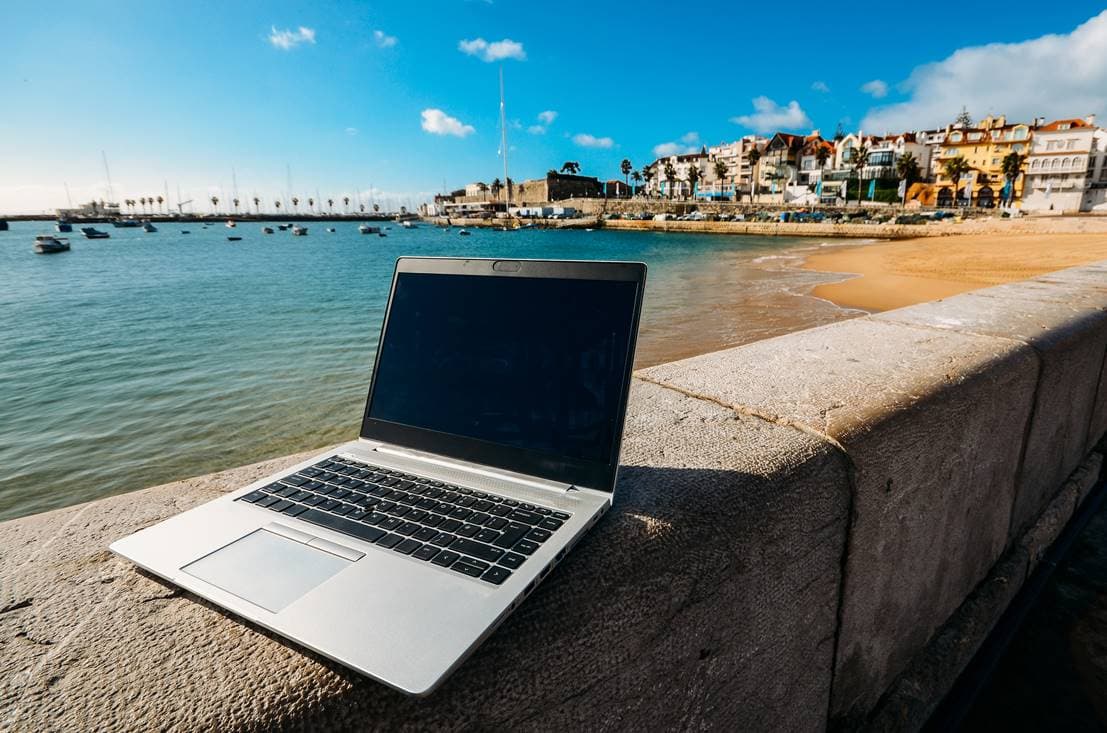
Why Is Portugal So Popular for Remote Work?
Portugal combines lifestyle appeal with practical advantages that make remote work seamless.
Key reasons remote workers choose Portugal:
Mild climate with more than 300 days of sunshine per year.
Strong digital infrastructure and fast internet.
Affordable cost of living compared to most Western European countries.
Welcoming culture and high English proficiency.
Diverse settings: cities, coastlines, countryside, and islands
According to Time Out, Portugal ranks among the best countries in the world for digital nomads, with Lisbon, Porto, and Madeira standing out as top hubs.

What’s Required to Work Remotely from Portugal?
Working remotely from Portugal comes with freedom, but also responsibility. It requires the right legal status, tools, and setup.
Here’s what you need to know:
The Right Visa or Legal Status
Your visa requirements depend on your nationality and how long you plan to stay.
EU/EEA/Swiss citizens
Do not need a visa to live or work remotely in Portugal.
Must register with local authorities for long-term stays.
Non-EU citizens
You may need one of the following options:
D2 Visa (Entrepreneur Visa)
Primarily aimed at entrepreneurs but also open to freelance and self-employed workers.
No minimum investment threshold.
Subsistence requirement.
Path to permanent residency.
D8 Visa (Digital Nomad Visa)
Designed specifically for remote workers and freelancers.
Requires proof of remote income of €3,680 per month.
Allows legal residence in Portugal.
Can lead to long-term residency.
D7 Visa
Available to those with passive income above €920 per month.
Suitable for retirees and individuals.
Often used by remote workers with flexible arrangements.
Golden Visa (Investment-Based Residency)
Allows residency through qualifying investments.
Includes access to Portugal and the Schengen Area.
Suitable for investors interested in co-working or commercial property.
Visa requirements may vary depending on individual circumstances and are subject to change.
Reliable Digital Infrastructure
Portugal offers strong digital connectivity across the country. You will need:
High-speed internet access (widely available in cities and co-working spaces).
Mobile data plans with good national coverage.
Secure cloud storage and file-sharing systems.
Remote Work Tools & Security
To stay productive and compliant while working abroad, you may need:
Communication and collaboration platforms.
Time and project management tools.
A VPN (virtual private network) for data security.
Password management systems.
Remote access and screen-sharing tools.
A Productive Work Environment
Choosing where you work is just as important as how you work.
Options include:
Home offices.
Cafés and hybrid workspaces.
Dedicated co-working spaces, offering professional infrastructure, networking opportunities, and flexibility.
Portugal has a well-established co-working ecosystem across Lisbon, Porto, Braga, Faro, Madeira, and beyond.
However, the nature of remote work means that digital nomads are also free to live in parts of the country further out from city centres, while still maintaining accessibility.

Do Remote Workers Pay Tax in Portugal?
Yes, remote workers may be required to pay tax in Portugal, depending on their tax residency status, length of stay, and source of income.
When Do You Become a Tax Resident in Portugal?
You are generally considered a Portuguese tax resident if either of the following apply:
You spend 183 days or more in Portugal within a 12-month period.
You have a habitual residence in Portugal (for example, a long-term rental or owned property intended as your main home).
Once classified as a tax resident, you are taxed on your worldwide income in Portugal.
What If You Stay in Portugal for Less Than 183 Days?
If you stay fewer than 183 days and do not establish habitual residence, you are usually considered a non-tax resident.
In this case:
You are taxed only on Portuguese-sourced income.
Foreign income may remain taxable in your home country.
However, each case depends on individual circumstances and applicable double taxation treaties.
How Are Remote Workers Taxed?
Tax treatment depends on:
Your visa type.
Your tax residency status.
Whether you are employed, self-employed, or a company owner.
The country where your income is generated.
Can I Avoid Double Taxation?
Portugal has double taxation agreements with many countries, helping prevent the same income from being taxed twice.

Is There a Special Tax Regime for New Residents?
While the traditional NHR regime has been replaced by a new incentive framework known as Tax Incentives for Scientific Research and Innovation (IFICI), individuals who qualified under the original programme can continue to benefit for the remainder of their 10-year period.
With this new tax regime, individuals working in specific fields will be eligible to pay a flat 20% income tax rate, with 0% paid on foreign-sourced income.
This regime covers employment or self-employment income for a consecutive period of 10 years, though it is important to note that it cannot be renewed at the end of this time.

What’s a Good Salary in Portugal?
When planning a move to Portugal, whether for remote work, employment, or investment, understanding local salary levels is essential to assessing your expected quality of life.
Average Salaries in Portugal
Salaries in Portugal are generally lower than in many Western European countries, but this is balanced by a lower cost of living, particularly outside Lisbon and Porto.
As a general reference:
Average national salary: €1,250–€1,350 per month (gross).
Lisbon and Porto: Higher than the national average.
Smaller cities and inland regions: Lower average wages, but significantly lower living costs.
Figures vary depending on sector, experience, and location.
What Is Considered a Good Salary?
A “good salary” in Portugal depends on lifestyle expectations and where you choose to live, but broadly:
€1,500–€2,000 per month: Comfortable living in smaller cities or with shared accommodation.
€2,000–€3,000 per month: Very comfortable lifestyle for a single person in Lisbon or Porto.
€3,000+ per month: High earning bracket, suitable for families, savings, and frequent travel.
Remote Workers and International Salaries
Remote workers earning international salaries often enjoy greater purchasing power in Portugal.
€3,000+ per month: Very comfortable lifestyle nationwide.
€4,000–€6,000+ per month: Excellent quality of life, with strong potential for savings and investment.
Portugal’s combination of affordability, strong infrastructure, and high quality of life makes it an attractive destination for professionals earning both local and international incomes.
Making Remote Work for You
If working remotely from Portugal sounds appealing to you, we’re here to help make it possible.
Our expert advisors can aid you through every step of your journey to Portugal, from handling visa applications to securing accommodation and helping with tax organisation.
Get in touch today to start the process.




Talk to one of our Real Estate Experts
Portugal Homes
Get the best property advice.