Portugal Homes
Get the best property advice.
Castelo Branco is the capital of the historic province of Beira Baixa, located in central Portugal and just 20 kilometres from the Spanish border. Known for its calm and welcoming atmosphere, the city combines wide boulevards, bustling squares, and generous green parks, creating a pleasant balance between urban life and natural surroundings.
Rich in history and cultural heritage, Castelo Branco offers visitors a wide variety of experiences ,from traditional landmarks to local events, all within a close-knit and familiar environment where the mountains and the city meet. With its strategic location, it’s also the perfect base for exploring the beautiful border region of central Portugal, including nearby villages, landscapes, and hidden gems that many travellers overlook.
Things to do in Castelo Branco
1. Garden of the Bishop’s Palace
.jpg&w=3840&q=75)
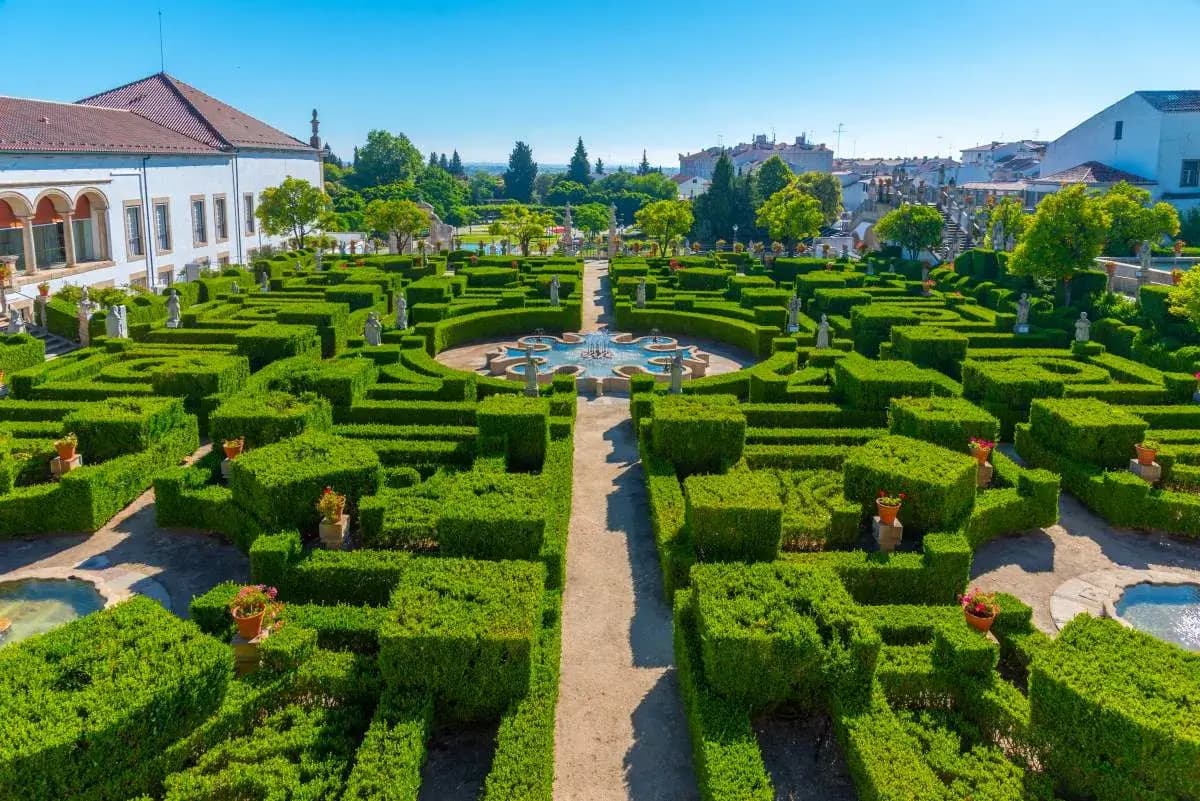
One of Castelo Branco’s most iconic landmarks, the Bishop’s Palace Garden is considered one of Portugal’s most unique examples of Baroque landscape design. The project was financed and overseen by João de Mendonça, Bishop of Guarda, and features a striking rectangular layout framed by balconies and decorative stone balusters.
The garden’s lower level is divided into 24 symmetrical sections, separated by trimmed hedges, and includes five lakes with fountains, symbolising Christ’s five wounds. A staircase on the west side leads to the upper level, where sculptures inspired by the Old Testament stand alongside water features representing purification.
2. Wander around the Old Town
.jpg&w=3840&q=75)
Castelo Branco’s medieval centre is a charming maze of narrow streets and whitewashed houses, full of character and history. One of the most memorable routes is Rua dos Peleteiros, a steep street whose name means “street of the furriers” a nod to the traditional crafts and businesses that once thrived here.
Along the way, you’ll pass through elegant squares like Praça de Camões, often considered the most beautiful in the region, where the old Town Hall stands proudly with its decorated coat of arms and welcoming arcade.
3. Enjoy the view from the Medieval Castle
.jpg&w=3840&q=75)
If you continue uphill from Rua dos Peleteiros, you’ll reach the medieval fortress that gave the city its name. Built in the early 13th century as a Templar fortification, the castle sits on the highest point of Castelo Branco, with its single tower visible from far away.
Although the structure was damaged during major conflicts — including the Portuguese Restoration War and the Napoleonic wars— it still offers a fascinating glimpse into the city’s past. Most importantly, the castle delivers one of the best panoramic views over Castelo Branco and its surrounding landscapes.
4. Tejo International Natural Park
.jpg&w=3840&q=75)
For nature lovers, Parque Natural do Tejo Internacional is a must. Stretching over 40 kilometres, this protected area is known for its peaceful atmosphere and rare biodiversity. The park is home to an impressive variety of species, including birds, mammals, amphibians, reptiles, fish species, and countless insects, alongside native vegetation such as cork oak trees, holm oaks, heather, and rosemary.
This is also where the Tagus River meets Spain, blending natural beauty with deep historical traces. Neolithic and Roman remains coexist with rustic settlements and traditional villages, offering a perfect mix of heritage and outdoor adventure.
5. Try the local gastronomy
.jpg&w=3840&q=75)
Castelo Branco is famous for its high-quality olive oil and honey, both of which make excellent souvenirs. Local cuisine in this rural region is hearty and comforting, based on fresh agricultural products and rich flavours that reflect the land itself.
For a truly authentic meal, try empadas de Castelo Branco (pastries filled with pork and onion), cheese-based soups, roast lamb, roast partridge, goat stuffed with bacon and herbs, or even fried liver in a flavourful sauce made with onion, tomato, and paprika.
6. Visit Monsanto
.jpg&w=3840&q=75)
Just a short trip away, Monsanto is one of Portugal’s most remarkable villages and was even voted “the most Portuguese village in Portugal.” Located within the municipality of Idanha-a-Nova, Monsanto is part of the famous Historical Villages of Portugal network, and stands out for the dramatic granite boulders that surround and shape the entire settlement.
It’s a dream destination for walkers and nature lovers, with hiking paths offering stunning views and unusual rock formations. While you’re there, don’t miss the Igreja Matriz de São Salvador and the Capela de São Miguel, two of the village’s most charming historic sites.
Portugal Homes
Get the best property advice.