Article
Portugal Homes
Get the best property advice.
What is the 25th of April in Portugal?
Every year, on the 25th of April, Portugal celebrates the end of the dictatorship that haunted the country for more than 40 years, and the beginning of the democratic regime that has allowed Portugal to become the country it is today.
Also known as the day of the Carnation Revolution, it’s one of the most important days in modern Portuguese history.
More than half a century on, its echoes can still be felt throughout the nation, from politics and culture to everyday life.
The revolution is a cornerstone of Portuguese national identity and plays a lasting role in how the country understands itself.
But what exactly happened on the 25th of April in Portugal in 1974, and why does it continue to matter so deeply to this day?
Portugal Before 1974
To understand what happened on the 25h of April in Portugal in 1974, it is essential to look at the decades that preceded them.
From the 1930s onwards, Portugal was ruled by the authoritarian Estado Novo (“New State”) regime under the dictatorship of António Salazar, later succeeded by Marcelo Caetano. Political and personal freedoms were severely restricted, with dissent controlled by the secret police, PIDE.
At the same time, Portugal was engaged in long and costly colonial wars in Angola, Mozambique, and Guinea-Bissau. These conflicts consumed more than 40% of the national budget and increasingly divided public opinion.
Combined with strict censorship, political repression, and mounting economic pressures, the foundations for widespread discontent were firmly in place.
Resistance emerged in many forms. Revolutionary protest music became a powerful cultural outlet, with several prominent Portuguese singers forced into exile to escape persecution. Political engagement also grew, particularly within socialist and communist movements, despite sustained efforts by the regime to suppress them.
By the early 1970s, dissatisfaction had spread into the armed forces. Poor pay, lack of freedoms, and frustration with the direction of the Colonial Wars led to the formation of a revolutionary group within the military known as the Armed Forces Movement (Movimento das Forças Armadas, MFA), often referred to as the “Captains’ Movement” due to the junior officers who led it.
This group would ultimately orchestrate the coup that ended 41 years of Estado Novo rule.
The Revolution Itself
Just after midnight on the 24th of April, the signal to begin the coup was broadcast over national radio.
It came in the form of two songs: first “E Depois do Adeus” by Paulo de Carvalho, Portugal’s entry in the 1974 Eurovision Song Contest, and then “Grândola, Vila Morena” by José Afonso, a revolutionary singer whose work had been censored by the regime.
Following these broadcasts, soldiers moved swiftly to take control of key points of power across the country. Although citizens were urged to remain at home, thousands took to the streets in support of the military.
The Carnation Revolution stands out for its remarkably peaceful nature. Faced with overwhelming popular support and the presence of the armed forces, government and military leaders largely surrendered without resistance. Only six deaths were recorded during the entire revolution: four civilians killed by shots fired from the roof of the secret police headquarters, and two police agents killed by advancing soldiers.
With the coup complete, the Estado Novo regime collapsed, and Portugal’s transition to democracy began.
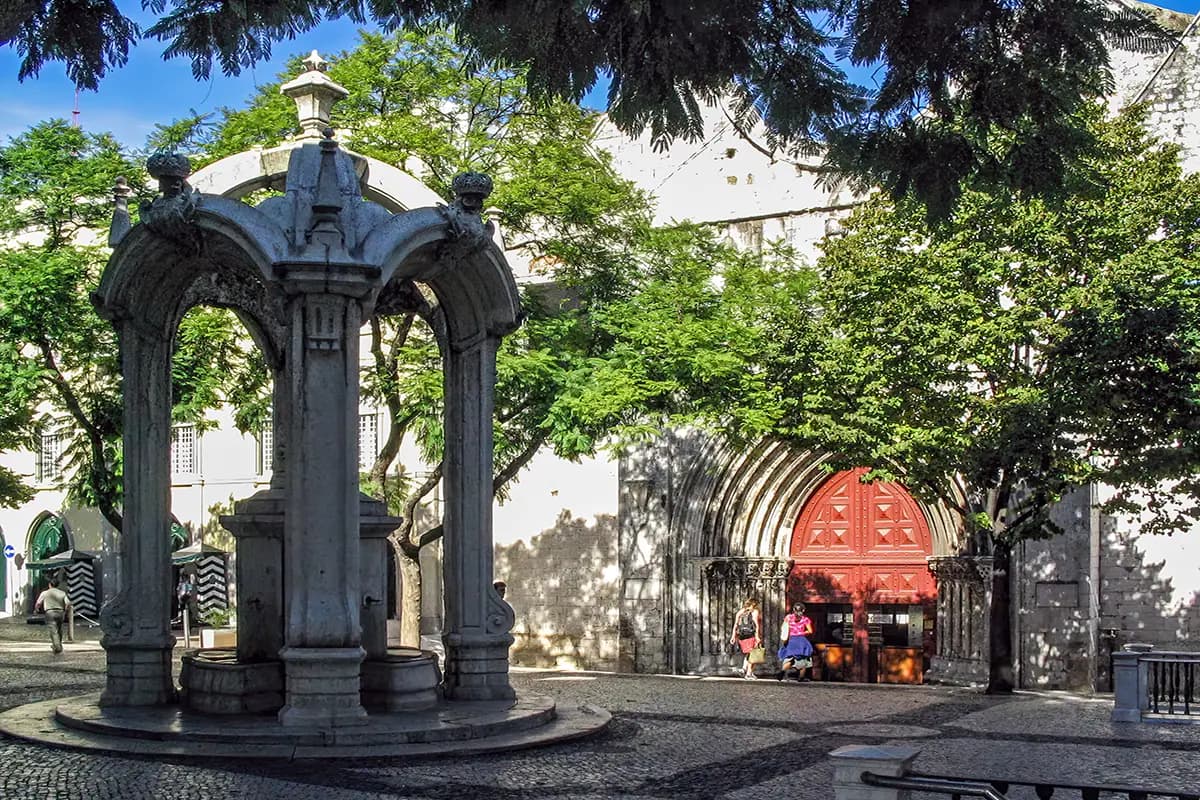
It was in Largo do Carmo pictured above is, perhaps, the most iconic location that embodies the Carnation Revolution.
Led by the most well-known Capitão de Abril, Salgueiro Maia, a force of soldiers surrounded the military headquarters of Quartel do Carmo.
The Prime-Minister Marcelo Caetano would eventually officially cede power around 6pm to General Spínola, officially marking the success of the Carnation Revolution, and ending the Portuguese “New State” dictatorship.
Why It’s Called the Carnation Revolution
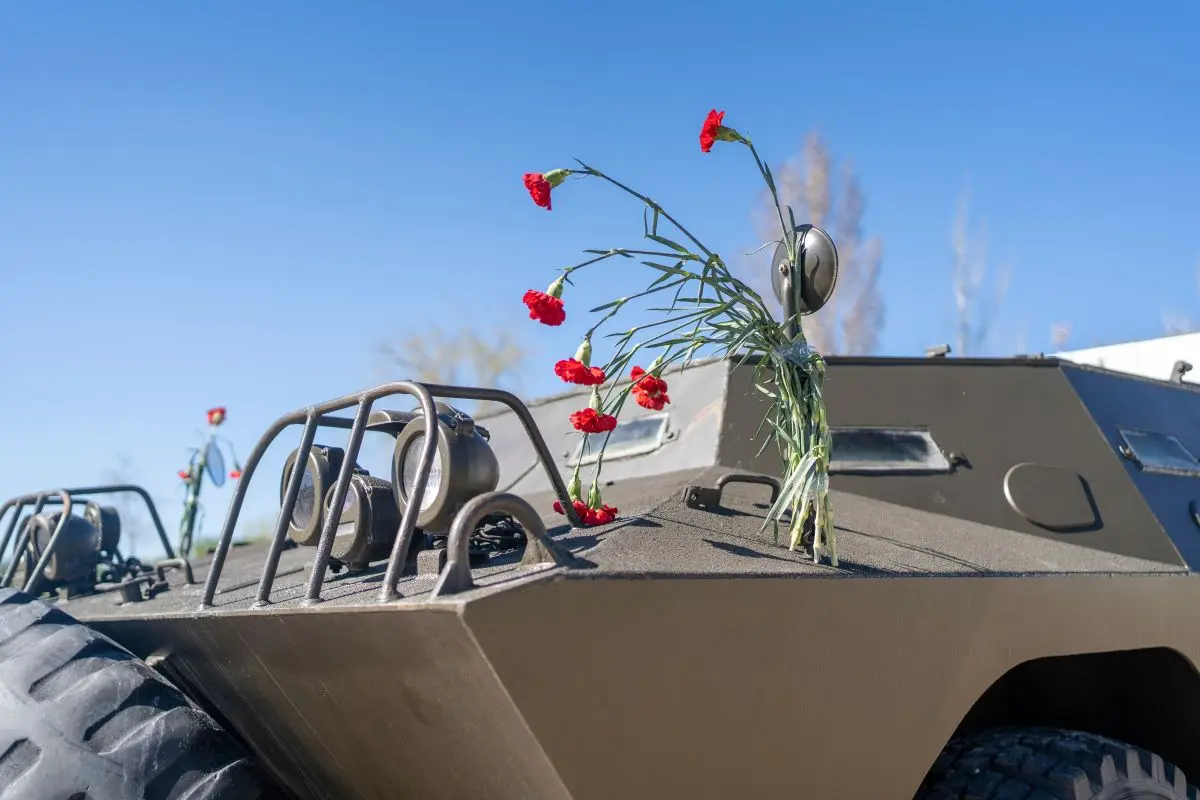
The revolution takes its name from the red carnations that soldiers placed in the barrels of their rifles and tanks as they marched through Lisbon. While there are several accounts of how this began, the most widely told story centres on a restaurant worker named Celeste Caeiro.
The restaurant where she worked was celebrating its first anniversary by offering customers red carnations. When the coup forced the restaurant to close, staff were told to take the flowers home.
On her way back, Caeiro encountered soldiers in Rossio Square and asked what was happening. When told that a revolution was underway, she handed one soldier a carnation, which he placed in the barrel of his rifle. She continued giving flowers to others, and the gesture quickly spread, with flower sellers across the city joining in.
The carnations became a powerful symbol of the revolution’s peaceful intent and have since come to represent the hope and ideals of the new Portuguese Republic.

The Legacy of the 25th of April
After a brief period of political uncertainty, the revolution led to the establishment of a democratic system, the adoption of a new constitution, and the end of censorship and political repression. The new government also brought an end to the Colonial Wars and granted independence to Portugal’s African territories.
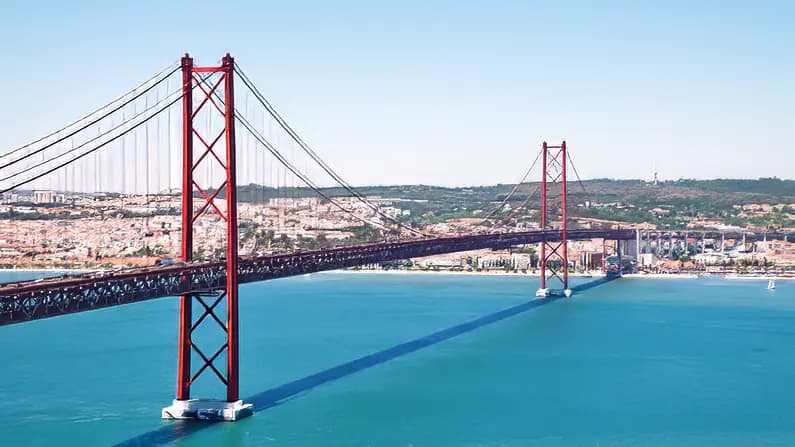
Reminders of the revolution remain visible throughout Lisbon and beyond. The iconic 25 de Abril Bridge, renamed from the Salazar Bridge after the revolution, stands as a daily symbol of change, as does the centrally located Avenida da Liberdade—Freedom Avenue.
The 25th of April Today
Today, the 25th of April is celebrated nationwide as Freedom Day (Dia da Liberdade), a public holiday across Portugal. The date is marked by parades, concerts, public gatherings, and cultural events in cities and towns throughout the country.
Freedom Day retains strong political and social significance, serving as a reminder of the values of democracy, idealism, and the power of collective action. In 2024, celebrations were particularly grand, marking the 50th anniversary of the revolution with an extensive programme of exhibitions, performances, and commemorative events.
In Lisbon especially, the city comes alive with street parties, large parades, and, of course, an abundance of red carnations.
History as Part of Daily Life in Portugal
Portugal’s past is deeply woven into its present, forming a rich historical tapestry that continues to shape everyday life.
The 25th of April is a powerful example of history that is not confined to textbooks or monuments, but actively lived, remembered, and celebrated. It remains a source of profound national pride and identity, reflecting Portugal’s enduring commitment to freedom and democracy.
Portugal Homes
Get the best property advice.