Article
Portugal Homes
Get the best property advice.
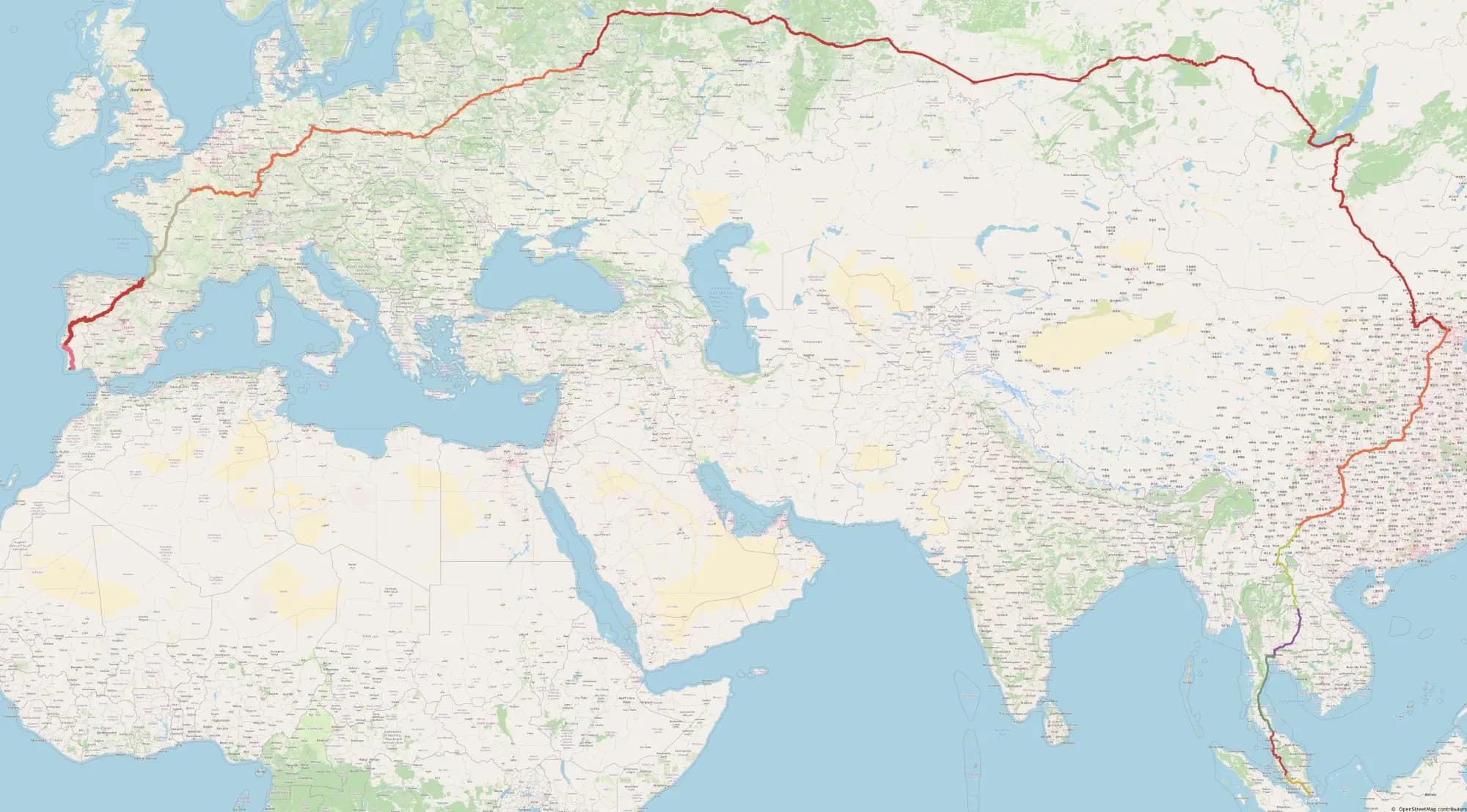
Imagine taking part in what was once considered the longest train journey in the world, a route stretching from Portugal to Singapore, covering more than 18,755 kilometres (11,654 miles) and taking approximately 21 days to complete. While unconventional, it raises an intriguing question: why fly, when a journey like this offers an ever-changing panorama of landscapes, cultures and cities along the way?
Is It Really Possible to Travel from Portugal to Singapore Without Flying?
The idea of a continuous rail journey from southern Europe to Southeast Asia gained attention following a hypothetical route map shared by Reddit user @htGoSEVe. The concept emerged after the opening of a new railway section in Laos, which appeared to complete a previously missing link in the transcontinental network, making such a journey theoretically possible.
First published in 2021, the route has since been refined by its creator and other users, with corrections made to account for service interruptions and updated rail connections. Even so, parts of the journey have already changed, and the route remains largely theoretical. Nonetheless, it continues to capture the imagination, offering a fascinating glimpse into what could be one of the most ambitious rail journeys ever conceived.
What a Train Journey from Europe to Asia Would Be Like
The journey would begin in Lagos, a coastal city in Portugal’s Algarve region, set along the Atlantic Ocean and widely recognised as part of the World’s Leading Beach Destination, according to the World Travel Awards — often described as the Oscars of the tourism industry.
From Lagos railway station, you would embark on what has been described as the longest train journey in the world. The original concept mapped a route through 13 countries, with 11 major stops and several overnight stays along the way.
After departing Lagos and changing trains in Tunes, the route would take you to Lisbon, offering the chance to explore some of the capital’s most distinctive neighbourhoods before continuing north to Porto. Given that overnight stops would be an essential part of the journey, there would be little reason not to embrace them early on. Extending your stay in Portugal would allow time to experience the country’s diverse regions, perhaps even taking detours inland before rejoining the main route.
Continuing east, the journey would then pass through Spain, followed by France, Germany, Poland and Belarus, before leaving the European Union altogether. The next stage would historically have led into Russia, which, at the time, was relatively straightforward thanks to services such as the Paris–Moscow Express. That route, however, was suspended during the pandemic and has remained inactive due to ongoing sanctions.
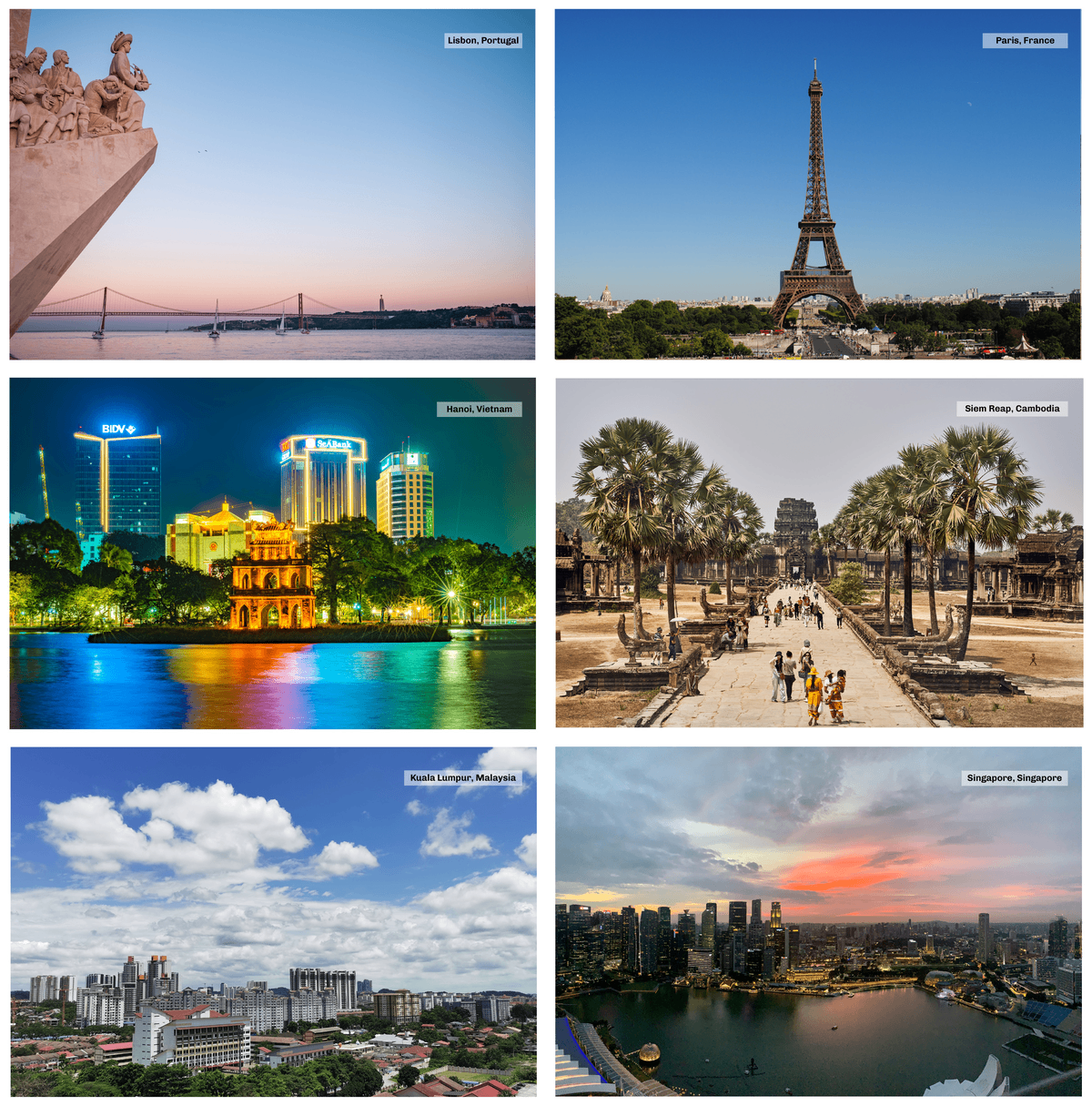
In this imagined version of 2021, the journey would continue across five additional countries by rail, bringing you ever closer to Asia. From there, the route would pass through destinations such as Vietnam, Cambodia, Malaysia and China. In reality, some sections would require travellers to switch briefly to buses in order to connect to the next operational train line, but remarkably, the journey would still involve no flights at all.
Travelling entirely over land would also come with clear environmental benefits. During the short period in which this journey appeared theoretically possible, estimates suggested it would generate just 0.08 tonnes of CO₂ equivalent, compared to approximately 1.67 tonnes produced by a direct flight from Lisbon to Singapore. While the full route was calculated to take around 21 days, it could easily extend into several months for those choosing to linger and explore along the way.
The Next Best Thing
Today, much of this once-imagined journey crosses regions affected by political instability, making the full route largely impractical for the foreseeable future. For now, at least.
That said, there is nothing to stop you from exploring the first stretch of this remarkable route. Portugal remains a stable and safe country, offering excellent weather throughout the year and a high quality of life. Better still, travelling within Portugal is easy and affordable, with extensive rail, road and bus networks connecting cities, coastlines and countryside alike.
For those who prefer to fly, Portugal also offers hundreds of direct international connections. But be warned, many visitors arrive with a return ticket and leave with a long-term plan.
If that happens, relocating is entirely possible thanks to Portugal’s range of visa options, including accessible routes such as the Golden Visa (via investment funds) and the D2 Visa.
Whether you come for a journey or stay for a lifetime, if moving to Portugal sparks your interest, get in touch. We’re here to help you secure your place on what could be the greatest journey of all, your relocation to Portugal.

Portugal Homes
Get the best property advice.